Tampilkan postingan dengan label gardening. Tampilkan semua postingan

Kamis, 09 Juni 2016

Blood (And Guts) On My Hands

I’m up early after a night of somewhat disturbing dreams, some of them violent and one in which I discovered I had terrifying large head lice inspired by the letter from the school nurse that came home in my son's lunchbox last week telling us to be on the lookout. So far, we’re okay -- except in my dreams. It’s surprisingly chilly downstairs just after 5 AM. I am wrapped in a blanket, waiting for the coffee to steep, listening to the animal kingdom come to life outside and surveying the solemnly overcast skies which look rather bruised.

Apologies for the radio silence the last few weeks. I got set back by yet another round of illness. The older boy and I both caught a bad flu and were knocked flat for a good two plus weeks of fever, aches, and lingering cough and exhaustion. But we’re all well again at the moment and I am experimenting with a new probiotic (S. salivarius) that may help keep upper respiratory infections at bay. So I got that going for me, as Bill Murray said.

Now that I've got my health back, I’ve been spending a lot of time killing things -- which is the most likely culprit of those violent dreams. Our glorious second year asparagus patch has ferned out nicely but just the other day, my son pointed out that there were grayish black caterpillars on the fronds of all the six foot tall plants. A quick inspection confirmed that there were indeed thousands of ravenous larvae on the plants, along with a smaller number of their parents, the common asparagus beetle.
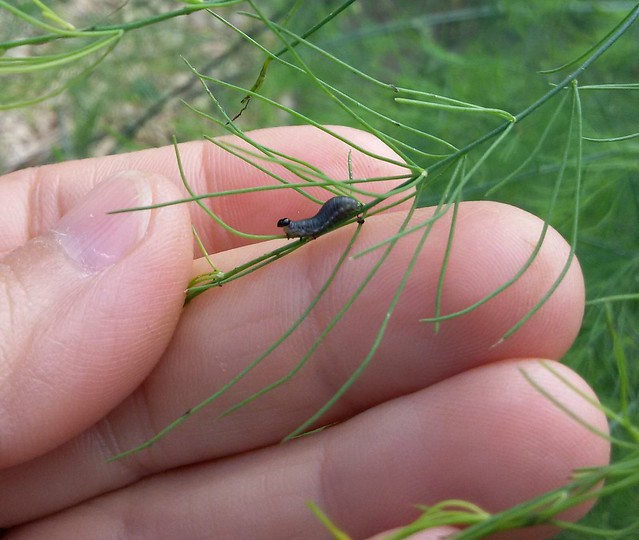
Asparagus beetle larvae by Eve Fox, the Garden of Eating, copyright 2016

I’ve now spent numerous hours smushing them, at first wearing gloves which were clumsy and limiting and, more recently, with my bare hands which allows me to be a lot more nimble but is simply foul.
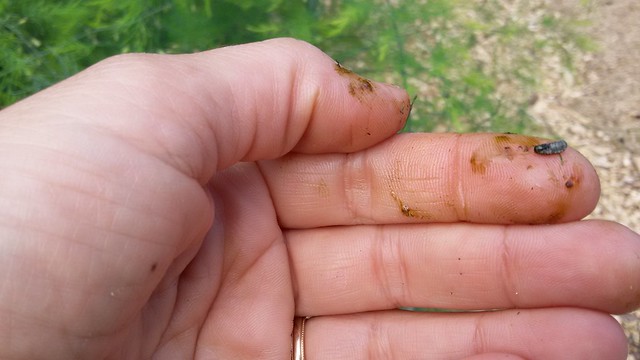
My hands after smushing asparagus beetle larvae by Eve Fox, the Garden of Eating, copyright 2016

Everything about the experience is gross from the way these little larvae look to the fact that they smell disturbingly like human semen when crushed. Shudder... It’s yucky enough that I’ve switched from crushing them barehanded to the slightly more civilized method of dropping them into The Jar of Death - a canning jar of soapy water which is equally effective and provides a little much-needed remove from the act of killing.
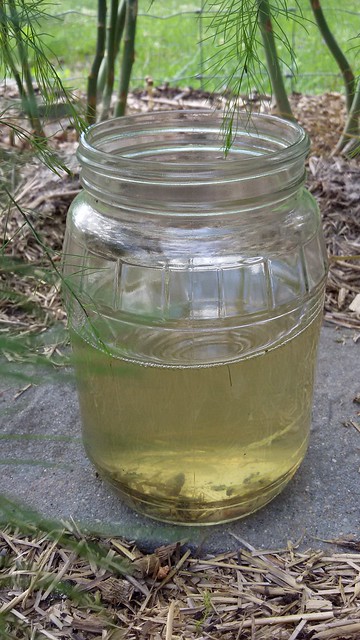
A watery, soapy death by Eve Fox, the Garden of Eating, copyright 2016

Unfortunately, asparagus beetles and their young are not the only pests we’re battling of late. As the weather has warmed, our rat problem seems to have abated (hurray!) only to be replaced by a similarly intense chipmunk problem (hiss!!! boo!!!) Despite being undeniably adorable creatures, they are truly a plague for those of us who garden and I’ve come to hate them with a murderous passion.
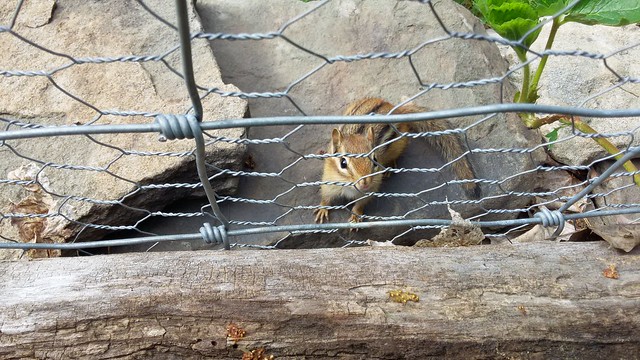
Chipmunk, cute but destructive by Eve Fox, the Garden of Eating, copyright 2016

I’ve written about this here in the past but to recap quickly: chipmunks dig and nibble heartlessly, killing plants with reckless abandon. They are particularly destructive to strawberries, beans of all kind, sweet potatoes, tomatoes, and this year for the first time, beets. In short, most of what we’re trying to grow...

We’ve pretty much given up on growing edamame this year after they mowed down two separate plantings - all that is left is one, lonely plant. They gave the string beans a similar hazing although I had enough of those seeds to keep on trying and some of the third planting has survived long enough to potentially turn into true bean plants --if they can survive the slugs that have come to call with the recent rain.
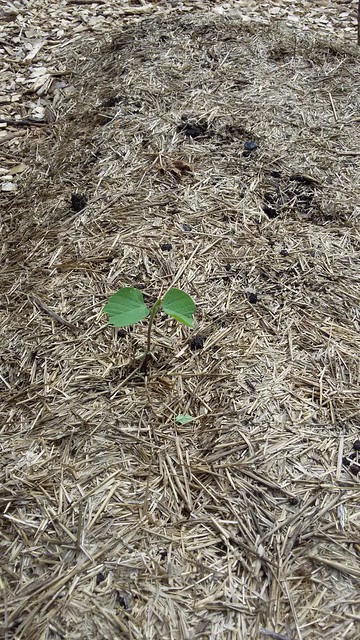
Lone survivor, the one edamame plant out of 26 or so that made it past the chipmunks by Eve Fox, the Garden of Eating, copyright 2016

Of the many beets I started from seed inside this spring, only three brave plants have survived the chipmunks’ rage-inducing nibbling. Our beautiful strawberries are scattered haphazardly around the garden, each with a bite or two taken out of it. GRRRRRRRRRRRRRRRR.
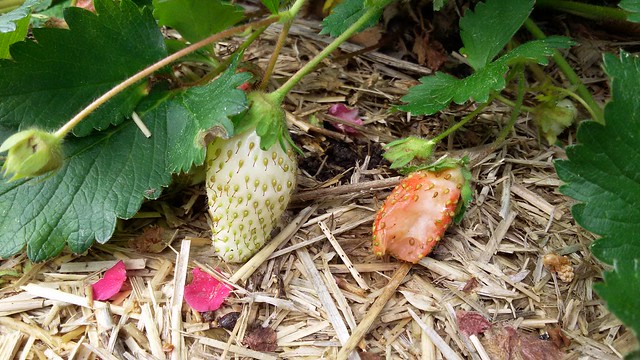
Strawberry with some bites taken out of it, the Garden of Eating, copyright 2016

Fortunately, I happened to have a handy twelve pack of rat traps lying around and have been killing them with decent success, though not nearly enough to ensure any kind of strawberry, edamame, bean or beet harvest, it seems.
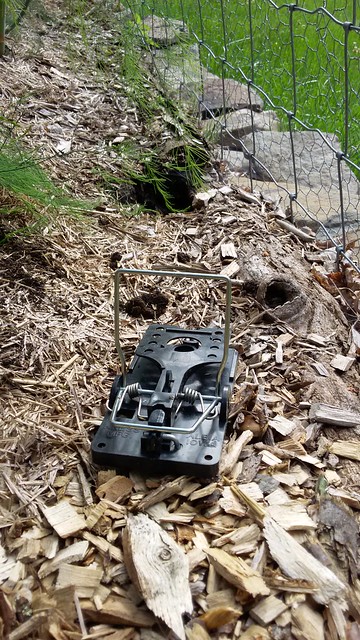
A trap set outside a chipmunks tunnel by Eve Fox, the Garden of Eating, copyright 2016

It’s an unpleasant business. It takes a decent amount of time to bait and set the traps every day, then there’s the task of what I’ve come to think of as “walking my trap lines” once or twice a day to dispose of anything that’s been caught, re-bait and reset the traps. But the much larger problem is that I do not actually like killing things. And while I am not squeamish (which is why I am the one who deals with the traps, not my husband) there have been several heartbreaking incidents in which the trap failed to kill the poor rodent, catching its leg or tail or something equally non-fatal. Despite my frustration and anger about their impact on the garden, I am not actually immune to their innate worth as living things and to be the author of their pain and misfortune is disturbing.

For these reasons, I am looking into adopting a feral cat from our local SPCA to outsource the killing to – a mercenary, if you will. My hope is to provide this feline with a safe (outdoor) home, de-worming it on occasion and providing water and supplemental food, as needed, and let nature take its course. In my more optimistic moments, I like to think that just the scent of the cat will deter the chipmunks from visiting. It will probably turn out to be way more complicated than that but one can always hope.

I’ll keep you posted. Meanwhile, if you want to like chipmunks, my advice is to stick to growing flowers (though not sunflowers).

You might also like:

Rats - We've Got 'Em

Snapping Turtle In the Garlic Bed!

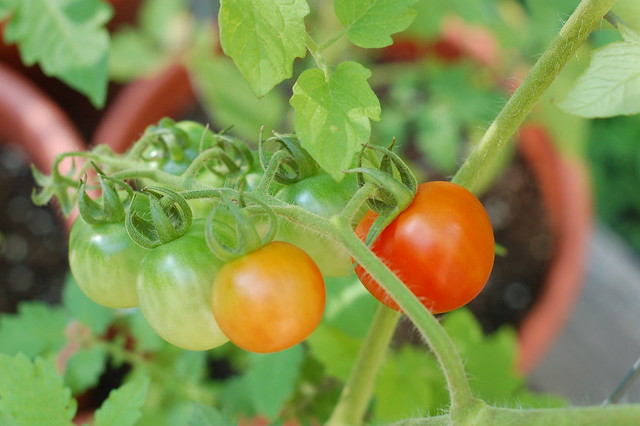
For Healthier Tomatoes, Save Your Eggshells

Jumat, 29 April 2016

For Healthier Tomato Plants, Save Your Eggshells

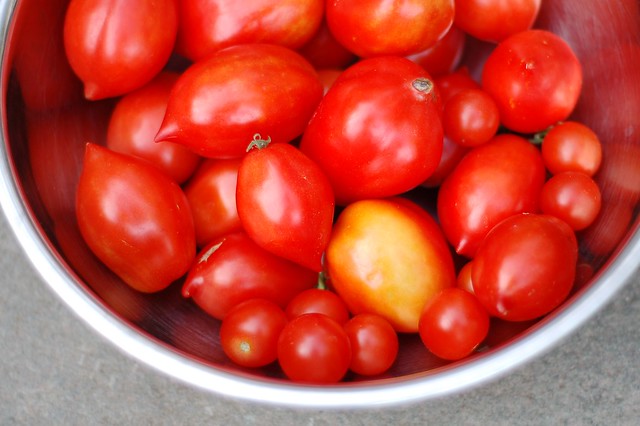
Today's tomato haul from the garden by Eve Fox, the Garden of Eating, copyright 2015

Picking a fat, flavorful tomato off the vine in your own garden is one of life's great pleasures. I love to hold them in my hands, feeling the warmth from the sun, sniffing their aromatic smell and feeling their slight stickiness on my skin before I take a bite.

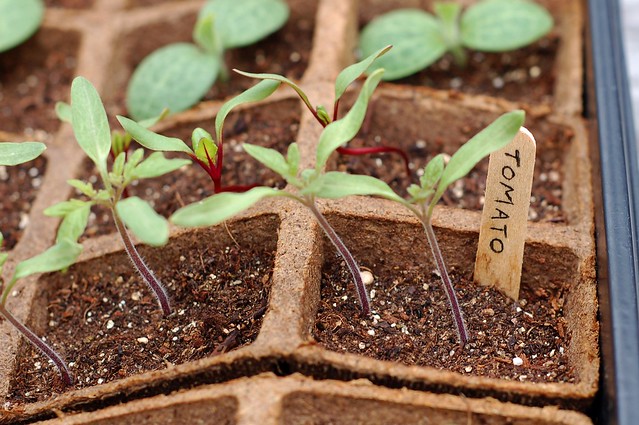
Tomato seedlings - Hudson Valley Seed Library's "Stoneridge Tomato" by Eve Fox, the Garden of Eating, copyright 2016

But it's deeply discouraging when the fruits you've pampered for months and are eagerly anticipating eating begin to turn brown and rot from their tips upwards. It's called blossom end rot and is a common and easily prevented tomato ailment.

Tomatoes suffering from blossom end rot courtesy of Scott Nelson via Flickr

Blossom end rot is caused by a calcium deficiency which is good news, because, unlike many other tomato woes, you can avoid it.

One very simple way to protect your plants is to place a bit of crushed up eggshell in the hole before you put your tomato plant in and fill the dirt in around it. I suggest you start saving your eggshells NOW.

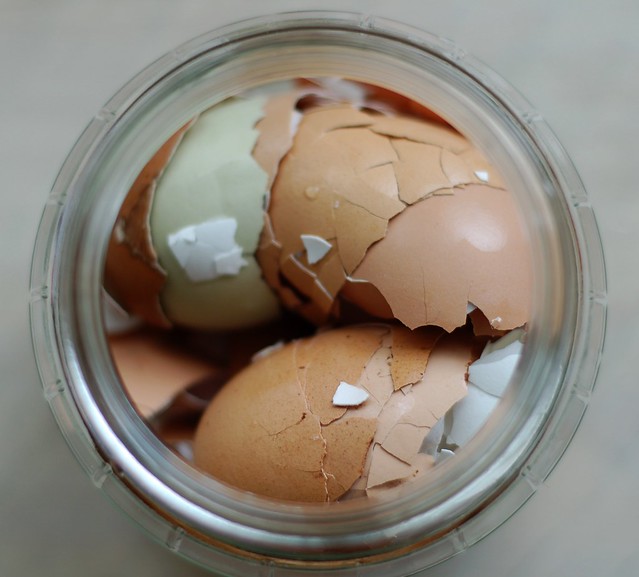
Save eggshells to ensure healthier tomato plants by Eve Fox, the Garden of Eating, copyright 2016

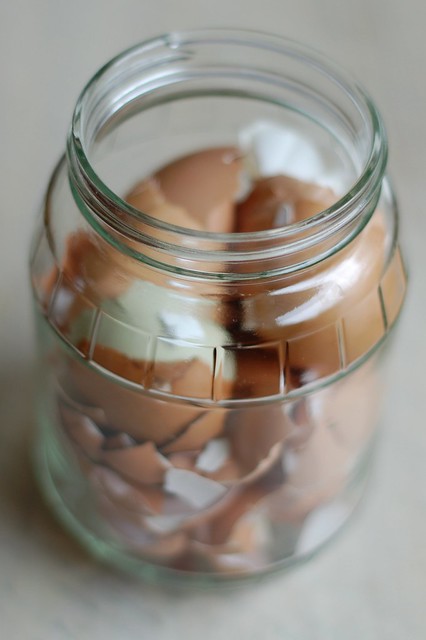
I'm keeping mine in a jar next to the sink to remind me not to toss them into the compost bucket and so far, it's working. You can also just put them back into the carton if you prefer. If you use a jar, leave it open to let them dry out.

Save eggshells to ensure healthier tomato plants by Eve Fox, the Garden of Eating, copyright 2016

When the time comes to plant your 'maters, just crush them up and pour a little into the bottom of the hole then proceed as usual. Thanks to my friend, Grian, for sharing this wonderful tip about the eggshells. More about Grian and her incredible garden here.

First ripe cherry tomatoes in our garden by Eve Fox, Garden of Eating blog, copyright 2011

A few more tomato-growing tips:

1. Do not grow tomatoes in the same place more than once every three years (or longer). Rotating beds will help prevent problems from diseases like wilts and blights build up in the soil. You should also avoid planting any potatoes, eggplant, tomatillos, and chili and bell peppers in that location as they are all members of the same family of Nightshades and are also susceptible to the same pests. A good rotation would be to plant tomatoes in year one then move on to a brassica crop (cabbage, cauliflower, broccoli or brussels sprouts) the second year then some kind of beans to add nitrogen back to the soil in the third year and then an allium like onion, shallot, leek or scallion the four year. Then back to tomatoes or some other nightshade.

2. Go easy on the nitrogen.  Unlike some plants, tomatoes do not need a ton of nitrogen. Too much can burn them or cause them to put out lush foliage but not many tomatoes - all leaf and no fruit. If you're using a bagged soil mix, look for one that is specifically formulated for tomatoes with higher amounts of phosphorus than nitrogen.

3. Err on the side of less water rather than more. Tomatoes are sensitive to over-watering and do quite well with very little water. In fact, some of the most delicious tomatoes I have ever eaten are the dry-farmed early girls we used to buy at the Berkeley Farmers' Market - the lack of water causes the plants to really concentrate flavors and sugars. Rather than sprinkling them every day, do a deep watering once or twice a week (depending on the weather, that is) to allow the water to get down to the roots where they can suck it up as needed.

4. Don't let dirt splash the plants. If you can rig one up, water your tomatoes via drip irrigation as that way you will avoid splashing the bacteria and fungus in the soil up onto the leaves where they can wreak havoc. If you can't hack a drip system (and most people can't), simply strip off the lower leaves and branches from your plants to avoid the so-called "ladder effect" of bacteria and fungus in the soil splashing up on the plants and infecting the leaves.

5. Pinch off any suckers. You'll get stronger, bushier plants and larger tomatoes if you pinch off any suckers that begin to grow up out of the crotch between the main stem and the branches coming off it. Some kinds of tomato plants can handle more aggressive pinching at various stages, as well but it depends on the type you're growing and what stage of growth the plant is in.

You might also like:

Senin, 25 April 2016

Snapping Turtle In the Garlic!

I promise I will post a recipe soon but in the meantime, our latest wildlife spotting was too good not to share.

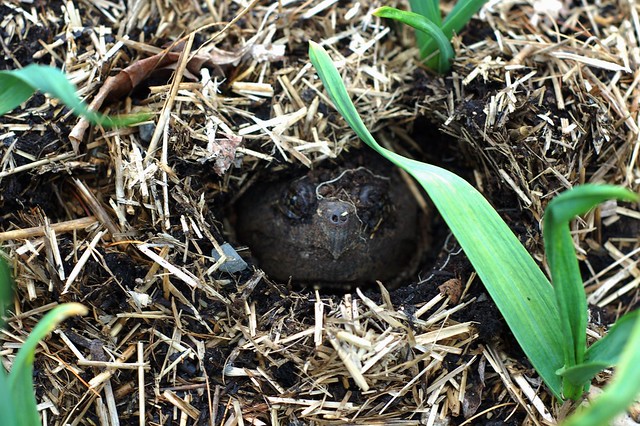
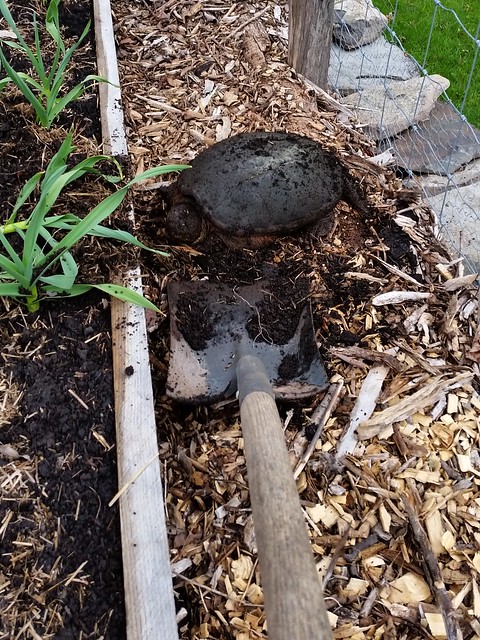
Snapping turtle decides to lay eggs in the garlic bed by Eve Fox, the Garden of Eating, copyright 2016

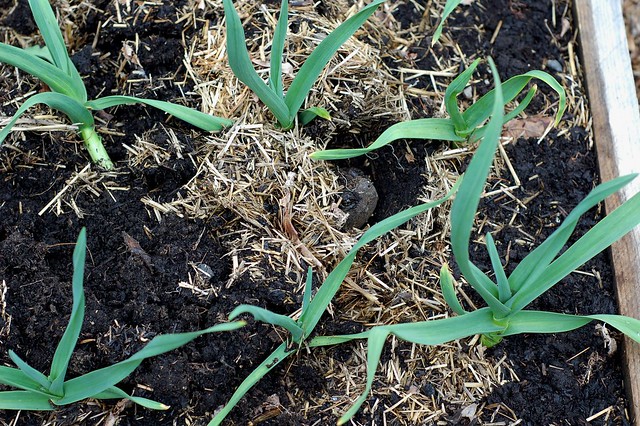
The other morning, I was out in the garden with James, my three-year-old, when I noticed that something had been digging in the raised bed we planted with garlic last fall. It's not unusual for a squirrel or chipmunk to wreak havoc but when I took a closer look, I noticed that the dirt was all mounded up - like someone had added a couple shovels full to it.

That's when I saw a large reptilian head nestled in the soft, brown earth. My first thought was, "Is that an IGUANA?!" and then I quickly realized that it was a snapping turtle.

Snapping turtle decides to lay eggs in the garlic bed by Eve Fox, the Garden of Eating, copyright 2016

I grew up next to a pond here in upstate New York so I have long experience with these fierce creatures. Snapping turtles (Chelydra serpentina) are native to this area and are known for their fierce, even combative dispositions. I once tried to help one across the road to prevent it from getting run over. Once.

I used a stick to prod it gently from behind but it whipped its head around and shot it's neck out about a foot at me with a vicious snap of its jaws. I dropped the stick and decided I'd just let it take its chances on the road. So when I found this fine old lady getting ready to lay a clutch of eggs in our garden, I quickly moved both kids to higher ground because their behavior around parking lots indicates that their instinct for self-preservation is a tad underdeveloped.

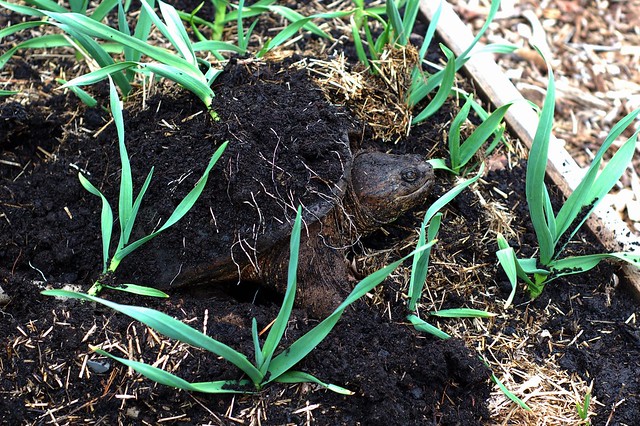
Her first response to our presence was to dig herself deeper into the dirt. An understandable reaction but not ideal from our point of view -- the last thing we need is dozens of baby snappers hatching out of our garlic and then coming back every year to lay their own eggs...

Snapping turtle decides to lay eggs in the garlic bed by Eve Fox, the Garden of Eating, copyright 2016

Unfortunately, moving a snapping turtle is not the easiest task. They are large, heavy and, unlike, most animals, they do not run from a threat. Instead, they prefer to turn and face it head on. So every time I would try to prod her forward with my long stick, she'd turn herself around and snap at the stick. She also let out a low, loud hiss that got her point across in no uncertain terms and gave me shivers. What a magnificent, scary beastie!

Eventually, we managed to prod/lift her out of the raised bed and get her onto a shovel.

Snapping turtle decides to lay eggs in the garlic bed by Eve Fox, the Garden of Eating, copyright 2016

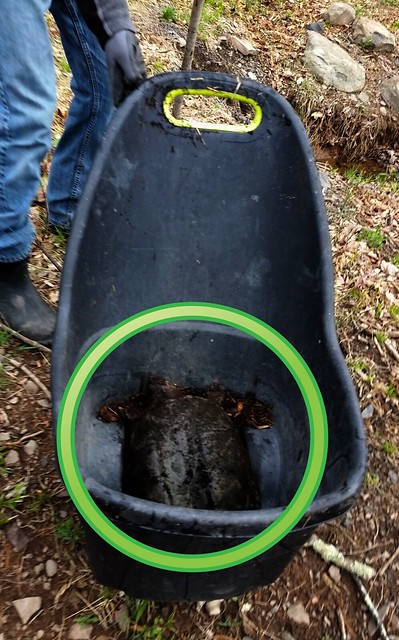
Then Rahm kind of gently shoveled her into this plastic garden cart I had laid down in front of her and tipped it back up, trapping her neatly inside.

Snapping turtle decides to lay eggs in the garlic bed by Eve Fox, the Garden of Eating, copyright 2016

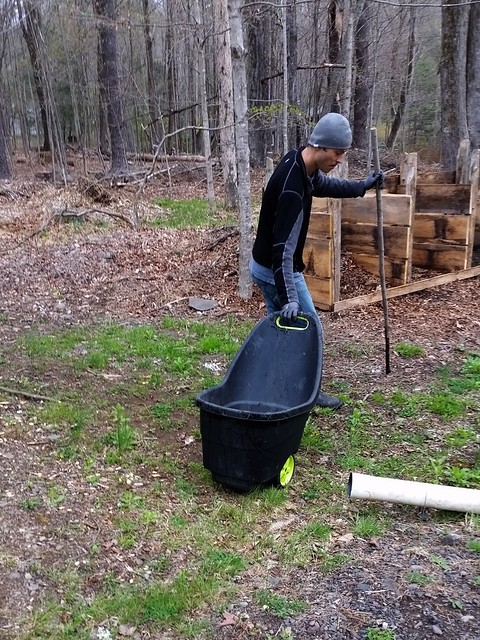
Then he dragged her out of the garden to a marshy area on our property that is back in the direction of the pond next door.

Snapping turtle decides to lay eggs in the garlic bed by Eve Fox, the Garden of Eating, copyright 2016

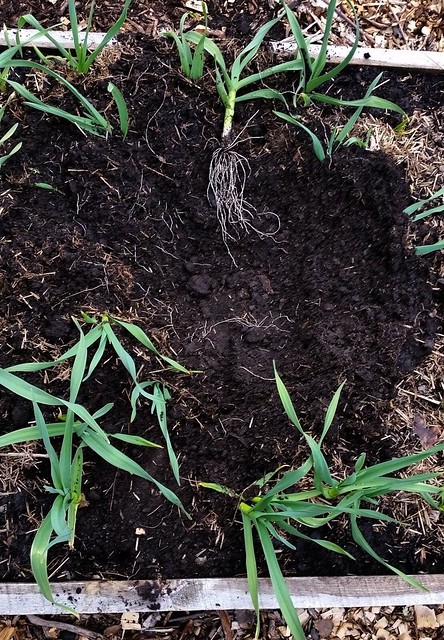
We will be adding some additional fencing to the part of the garden where she came in as we'd prefer not to have her back again and would also hate to waste her time when she could be finding a more hospitable location for her nursery. The incident left a bit of a mess but we replanted the garlic and are hoping it will make a full recovery.

Snapping turtle decides to lay eggs in the garlic bed by Eve Fox, the Garden of Eating, copyright 2016

Although this was a bit too close for comfort for my taste, especially with the small humans running around, I will note that the boys were DELIGHTED by the whole incident. So much better than watching Nature shows on PBS (though we like those, too.) Naturally, I looked them up when I got inside. Here are my favorite snapper facts:
  • They look ancient because they are. Snapping turtles have been around in more or less the same form for 40 million years and used to hang with the dinosaurs (no relation).
  • They keep growing as long as they're alive and can get up to at least 75 pounds in the wild (heavier in captivity). They can live to at least 100 and one thing I read said they can live until 170 years by which time they must be the size of a small car.
  • They do not reach sexual maturity until they are between 12-20 years old - the further north you go, the longer it takes them to mature. That means the mom we met was probably at least 15 years old.
  • The sex of the baby turtles is determined by the temperature in the nest. Eggs maintained at 68°F produce only females; eggs maintained at 70-72°F produce both male and female turtles; and those incubated at 73-75°F produce only males.
  • Do not ever pick up a snapping turtle (or any turtle) by its tail - you can do serious damage to it's vertebrae and spinal column (you can also get bitten). A good rule of thumb is not to pick up a snapping turtle... But if you do need to for some unimaginable reason, you can most safely (for you and the turtle) grab it underneath its carapace, above its back legs. Beware the head - they can really whip that thing around far.
  • The snapping turtle has been the state reptile of New York since 2006 - who knew?!
  • Lest you are thinking about bringing one home, I will leave you with my favorite sentence from the Wikipedia entry on snapping turtles, "The common snapping turtle is not an ideal pet." I actually laughed out loud when I came to it.

You might also like:

Selasa, 19 April 2016

What's Happening Around Here Lately

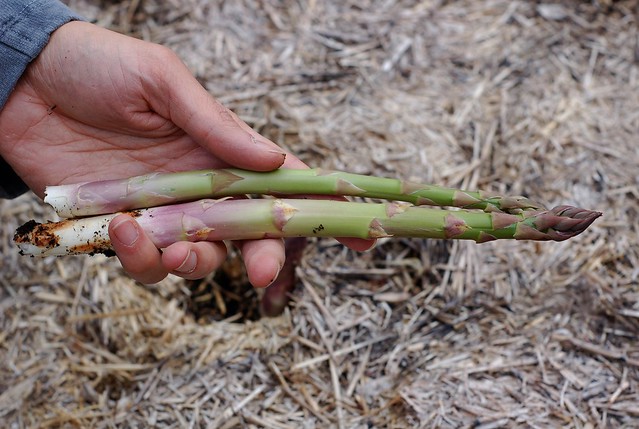
First asparagus by Eve Fox, the Garden of Eating, copyright 2016

Today is my birthday. Our older son had been home sick with a bad flu for almost a week but was finally well enough to go to school this morning. So I've been soaking up the quiet and enjoying the flood of sweet b-day wishes via email, Facebook and phone. My favorite one so far is from my friend, Syed who posted, "Look at you, older and ornerier" on my Facebook page :)

I've been sick since last week, too, and when I caught a glimpse of my face in the mirror in between nose blows and coughs this morning, I thought, "So this is 39 - it's not pretty..." But, as they say, "It's all good," since I have, thankfully, not built my life around being young or beautiful. I find that I also like both myself and my life more and more as I get older. I wouldn't trade 39 for 19 or 29 or any other age.

And I'm not the only one greeting a brand new year. A whole lot of other living things are getting in the spirit around here. Since a picture is worth a thousand words, here are a few to show you some of the lovely things popping up at our house this Spring.

Also, I'm probably jinxing it by writing this but I have not seen a rat since I wrote that last post. It probably won't last but it sure is nice while it does.

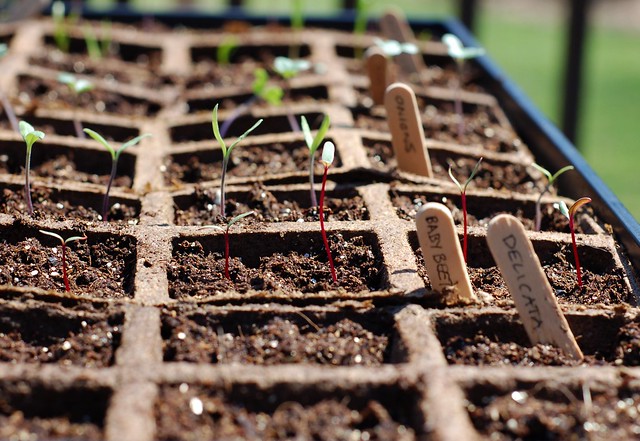
Assorted seedlings by Eve Fox, the Garden of Eating, copyright 2016
Beets, squash, onion and more seedlings getting some real sun today.

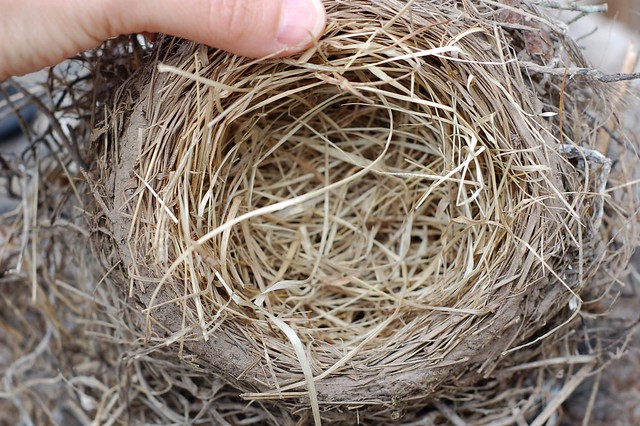
Robins' nest by Eve Fox, the Garden of Eating, copyright 2016
A pair of robins built this beautiful nest from mud, straw and twigs, then abandoned it for some reason.

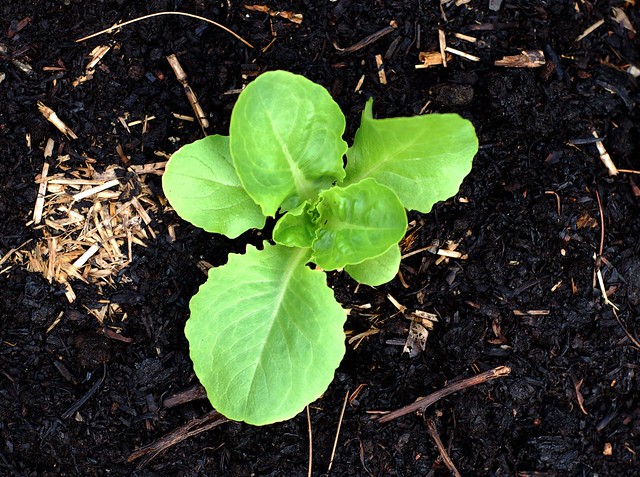
Lettuce start by Eve Fox, the Garden of Eating, copyright 2016
So looking forward to some fresh greens...

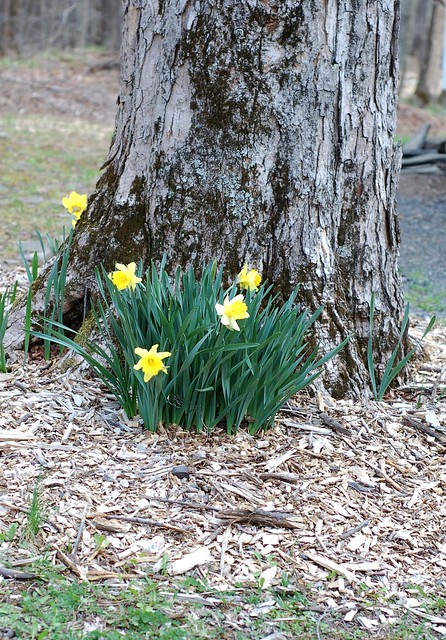
Daffodils by Eve Fox, the Garden of Eating, copyright 2016
I moved these daffodils from a strange spot in a deep bed of gravel last year and now they're up!

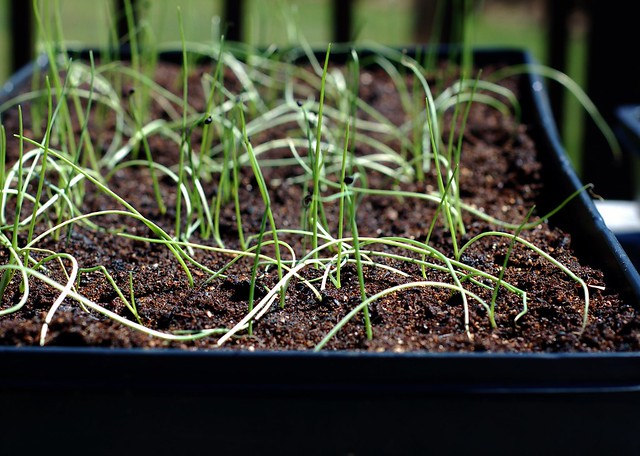
Onion seedlings by Eve Fox, the Garden of Eating, copyright 2016
Onion seedlings taking a break from the fluorescent lights to get some real sunshine.


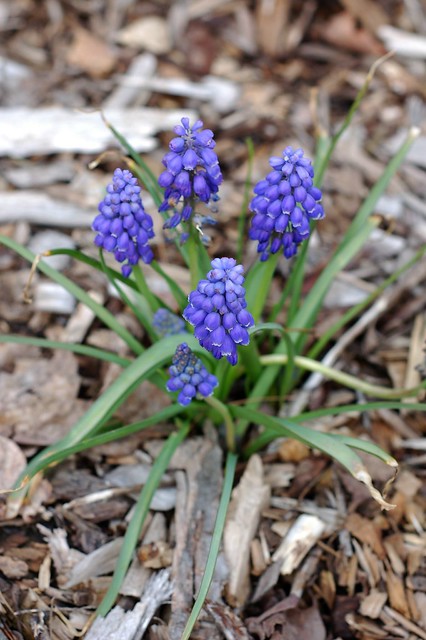
Grape hyacinth by Eve Fox, the Garden of Eating, copyright 2016
Delicate, little grape hyacinths have a lovely smell of early Spring.

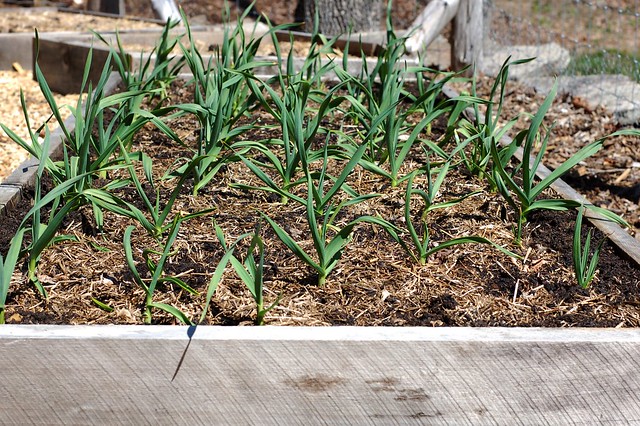
Garlic is up by Eve Fox, the Garden of Eating, copyright 2016

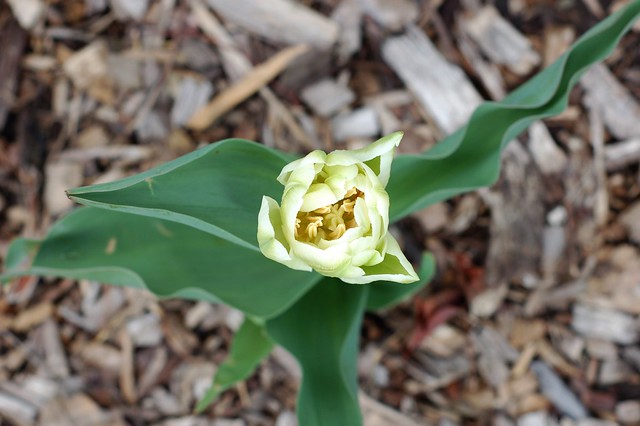
First tulips by Eve Fox, the Garden of Eating, copyright 2016
I planted these tulips in the fall and, like magic, they've arisen.

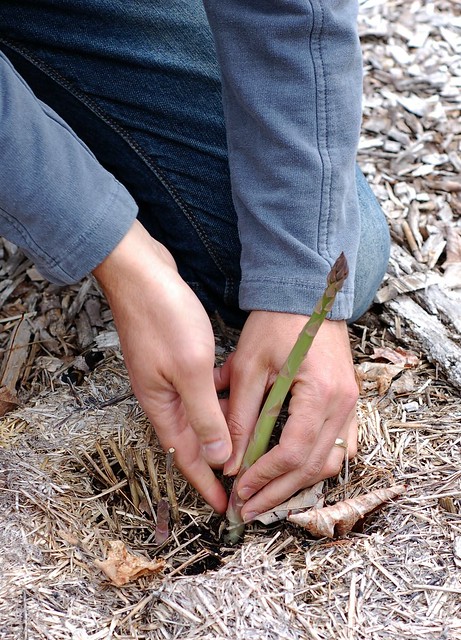
First asparagus by Eve Fox, the Garden of Eating, copyright 2016
Last year's asparagus crowns are just getting going. Rahm is practically beside himself with excitement!

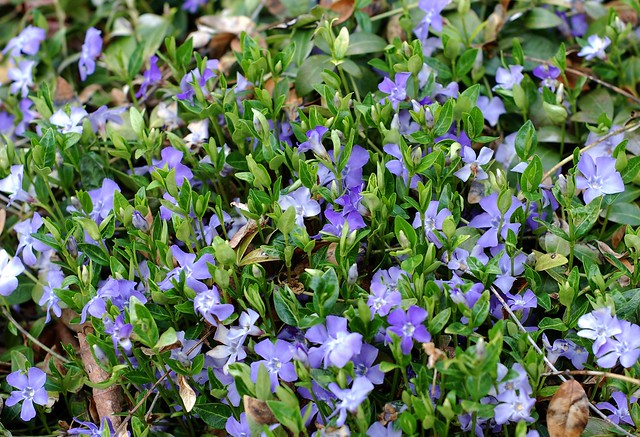
Periwinkle flowers by Eve Fox, the Garden of Eating, copyright 2016
Periwinkle waking up and putting out a riot of new leaves and flowers.

You might also like:

Senin, 04 April 2016

Rats

We've been battling a rat problem since last fall. It's decidedly unappetizing.

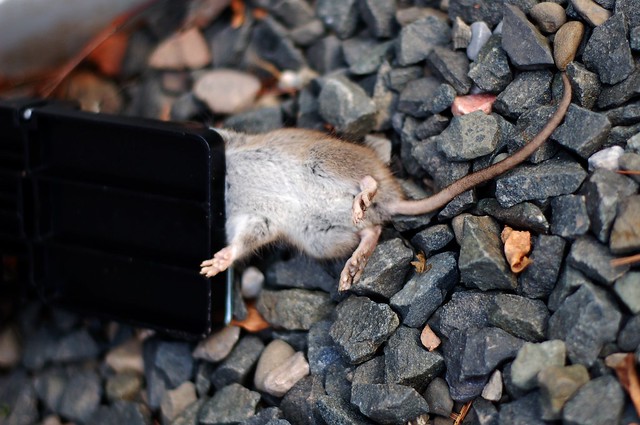
Rat in trap by Eve Fox, the Garden of Eating, copyright 2016

They tunneled about in the compost bins - sometimes one would pop its almost-cute, little head out of a hole as I dumped the latest bucket of scraps in ("Oh, good, that lazy waitress is finally back!," they were probably thinking...) They wintered in the woodpile - a smart choice since it's cozily protected from the elements and conveniently located right next to the compost. We figured this out when the firewood became increasingly covered in copious amounts of rat droppings (which are a LOT bigger than mouse droppings) that we then had to sweep or knock off before loading it onto the wood cart each time we brought wood inside.

If they'd left it at that, I don't really think we'd have minded but they've also been breaking into the house for months, chewing holes through the dishwasher hoses and the dryer vent to get from the crawlspace into the pantry - where everything is now under lock and key after numerous messy meals that required me to clean the whole room.

Pantry under glass by Eve Fox, the Garden of Eating, copyright 2016

But of course it's not just the pantry, it's also the kitchen. They are fond of dragging whole bananas behind the dishwasher for what my husband and I have started to call a "banana party." For some reason, these celebrations get them whipped up into such a frenzy that they have to vent their excitement by chewing through the electrical wires that power the heating element of the dishwasher. It's happened a few times, fortunately, my husband is quite handy.... They also like to pull entire bags of pretzels behind the fridge and steal multiple tomatoes off the counter, somehow smearing them all over the floor in their frenzy. And they don't just come out at night - I have encountered them during the day - bold as brass.

In short, it's been a problem. We think (fingers crossed) that we've finally closed up all of the gaps, cracks and tiny holes that they were using to get inside. You would be amazed at the tiny spaces these creatures can fit through - it's really impressive!

But lately we've been seeing them tunneling and strolling about on the rock wall right behind the house and scurrying alongside the house and along the front deck. One even stood up on its hind legs to look through the glass of the front door the other day.

Rat traps by Eve Fox, the Garden of Eating, copyright 2016

We've put out some traps (clearly) and killed four in the last week. I was feeling all triumphant about it until I came across this disheartening bit of information in my research:

"Brown rats live in large, hierarchical groups. If a large fraction of a rat population is exterminated, the remaining rats will increase their reproductive rate, and quickly restore the old population level."

To which I can only say, "Well, shit." Not to mention that they're so smart that they've quickly learned to avoid the traps, no matter how alluring the bait we use is.

But we do not want to use poison since it could potentially kill other animals like hawks and coyotes and foxes that could eat the poisoned rats. Judging by how quickly the dead rats I've tossed into the woods have disappeared, they're clearly considered a delicacy. After all, they're raised on a diet of locally-grown, organic food that we've provided :)

A rat terrier would probably do the trick but we really, really do not want a dog. I could not handle having one more messy, hungry, needy being depending on me at this point.

We had been planning to get chickens this spring but are having second thoughts since we already have a rat problem and chickens tend to draw rodents... But we really want chickens! So we're at a bit of an impasse.

Hopefully, this is not too much information for you. I keep thinking about this blog and the seemingly millions of other food-related blogs out there and have decided that I am bored by most blogs and sometimes I am even bored by my own blog.

I am tired of blogs written in a cutesie tone sprinkled with lots of "for realz" and "you betcha"s and emoticons and perfectly posed pictures with stripey straws in them. Not only do I not have time to take perfectly posed photos, I also prefer writing that is honest. Blood and guts and failure and insecurity are all important parts of the human experience. Stripey straws, not so much. Perfect is boring.

So I am going to try to write more about what's really going on and that includes rats - lots of 'em. I will continue to write about food and gardening and the like, of course, but I want to curb my impulse to sugarcoat and sanitize things (though I did spare you the more graphic images of the dead rat in favor of this more genteel, Wicked Witch of the East-style one...)

Feel free to stop reading or unsubscribe if this is not your bag.

You might also like:

Jumat, 24 Juli 2015

Thrifty Gardening Tip: Don't Chuck Those Scallion Roots

Scallions

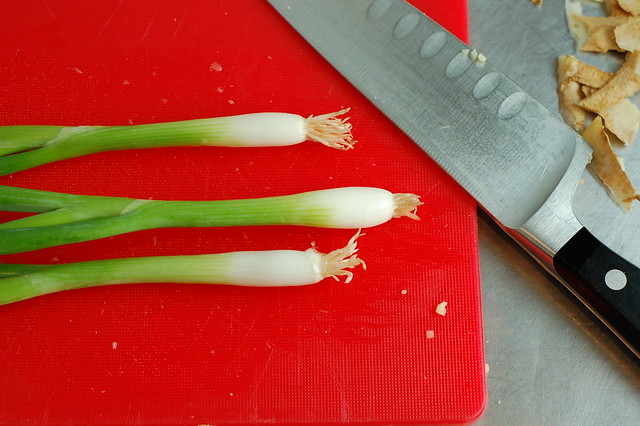
I learned this fabulously thrifty little trick from my friend Julia of The Preserved Life on a recent visit to her home. During a tour of her gardens, she asked if I knew that you can grow scallions from the root ends of store-bought scallions that you would typically toss in the compost? I did not but I do now!

I happened to use some scallions a couple days later. I kept the root ends and ran out to try to find a spare patch of ground in my garden.

Scallions by Eve Fox, the Garden of Eating, copyright 2014

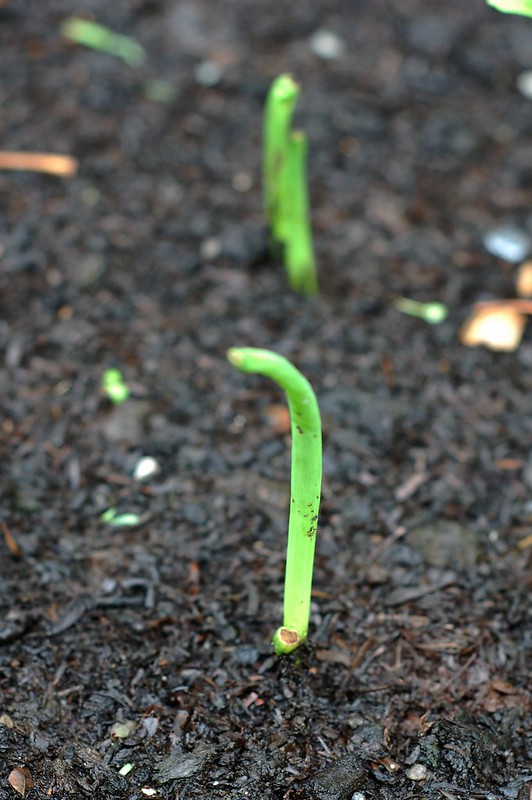
I decided I could fit them in between some onions, cabbages and beets so I poked my finger into the dirt to make some holes, dropped the trimmings in with the root ends down, covered them up with dirt and gave them some water. A week or so later, a little bit of green was poking up out of the dirt.

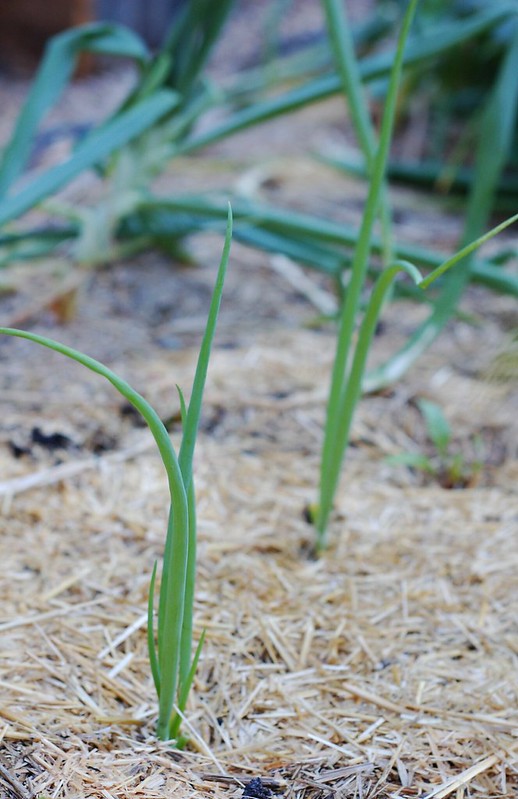
Baby scallion planted from old roots by Eve Fox, the Garden of Eating, copyright 2015

And now, several weeks later, I've got these lovely young scallion plants. So easy!

Scallions grown from scallion root ends by Eve Fox, the Garden of Eating, copyright 2015

Give it a try. And check out Julia's blog - it's one of my very favorites.

You might also like:
For more delicious recipes, gardening ideas, foraging tips, and food-related inspiration "like" the Garden of Eating on Facebook, or follow me on Twitter and Pinterest.

Jumat, 01 Mei 2015

Planting Asparagus Crowns - Investing In a Tasty Future

Last weekend, we planted two dozen + asparagus crowns in our slowly coalescing garden (fencing, fencing, fencing.) Although it will be a few years before we can begin to harvest the spears in earnest because you must first give the plants time to establish themselves, it was very exciting.

Laying the asparagus crowns over the mounds of compost by Eve Fox, the Garden of Eating, copyright 2015

Just think, in a few short years, we can walk out our door and snap tender green asparagus right out of our own beds. It doesn't get any fresher than that.

Although we're clearly at the beginning of the process, the planting was easy. Here's how it went in case you'd like to make a similar investment in your edible future.

Jersey Supreme second year asparagus crowns by Eve Fox, The Garden of Eating, copyright 2015

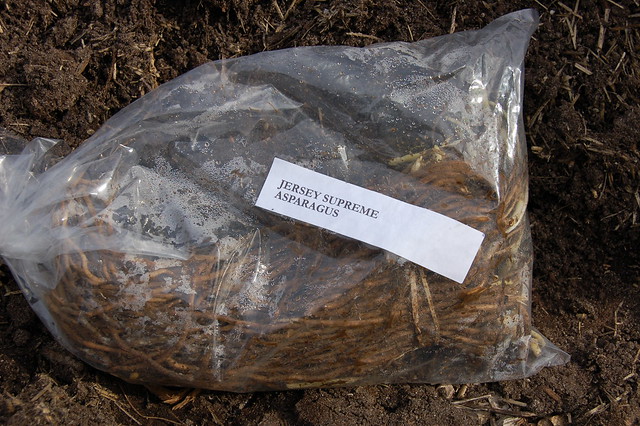
1. We ordered 25 second-year Jersey Supreme asparagus crowns from a grower who'd gotten great reviews on Amazon (kind of ironic but we knew the shipping would be quick and liked that we could see real-life reviews from a lot of people.) It cost roughly $20 with the shipping and, as predicted, arrived within a couple of days.
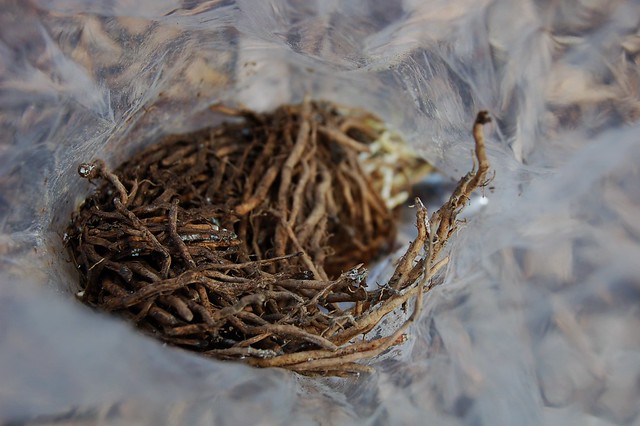
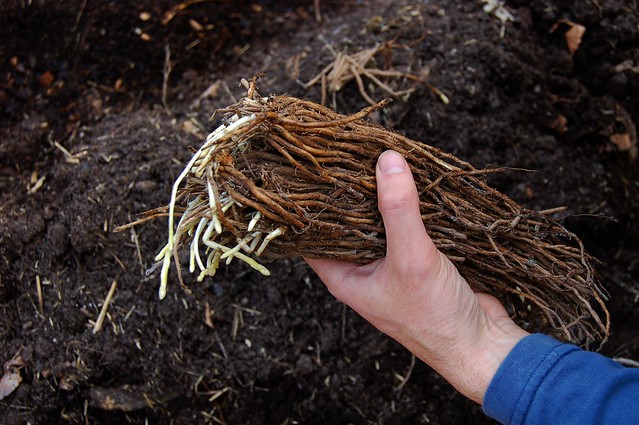
Jersey Supreme second year asparagus crowns by Eve Fox, The Garden of Eating, copyright 2015

If ordering plants online is not your bag, you should be able to get them from a local nursery, in season. Although there are a number of varieties, the basic differences boil down to green or purple. Although the purple ones are really pretty, they turn green when you cook them so we just opted for the plain old green ones. Per the grower's directions, we stored the bag of crowns in the fridge while we readied their bed.

Jersey Supreme second year asparagus crowns by Eve Fox, The Garden of Eating, copyright 2015

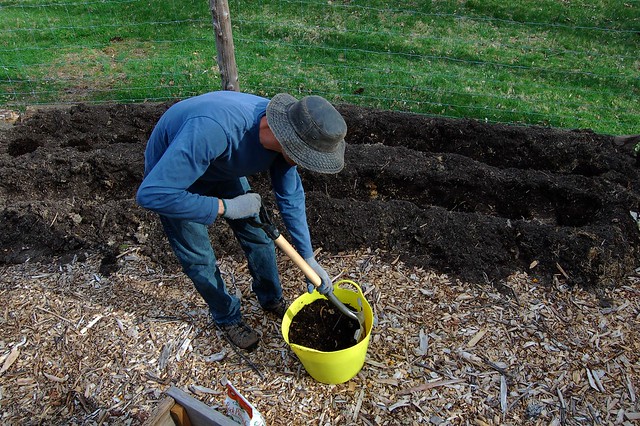
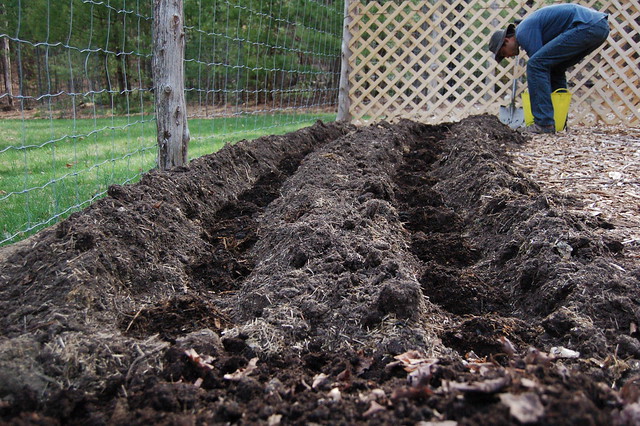
2. My husband, Rahm, dug a roughly 8-inch trench for them to grow in (anything from 6 - 12 inches deep is fine). We planted two rows side by side with about two feet between them.

Turning the compost for the asparagus trench by Eve Fox, The Garden of Eating, copyright 2015

3. He mixed a good amount of our rich composted dirt with a little rock phosphate to help stimulate root growth (follow the directions on the package to get the right amount). Then he dumped a little mound of about four inches of this compost every 12-18 inches along the trench.
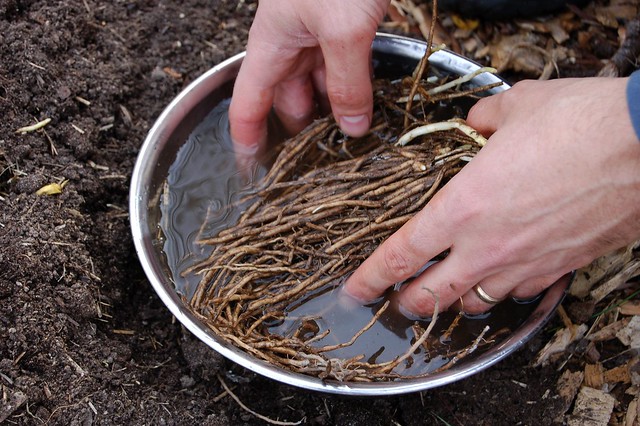
4. Meanwhile, I removed the crowns and soaked them briefly in warm (not hot!) water.

Soaking the asparagus crowns briefly in warm water by Eve Fox, the Garden of Eating, copyright 2015

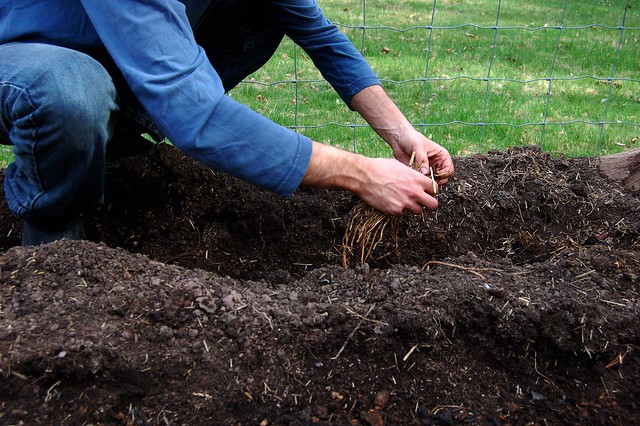
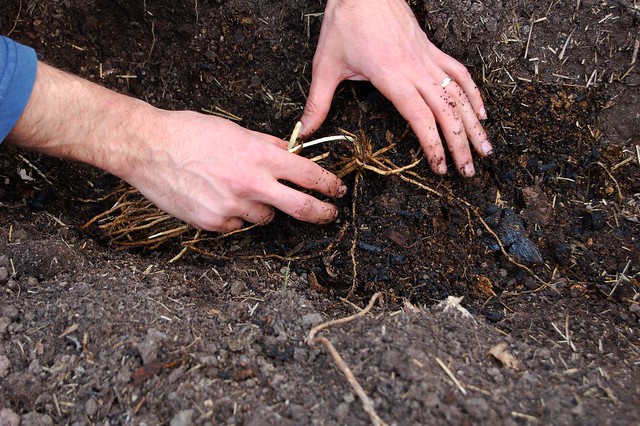
5. Then we untangled the roots of each crown and laid the spidery looking things right on top of the little compost mounds.

Laying the asparagus crowns over the mounds of compost by Eve Fox, the Garden of Eating, copyright 2015

6. Rahm came back through the row and covered the mounds and crowns with about two inches of good dirt, not compost.

Making hillocks of composted dirt in the two trenches for the asparagus crowns by Eve Fox, the Garden of Eating, copyright 2015

7. We would have watered but it was supposed to (and did) rain so we just waited a few hours and they got a good watering in. But you should water if you're not due for a good soaking.

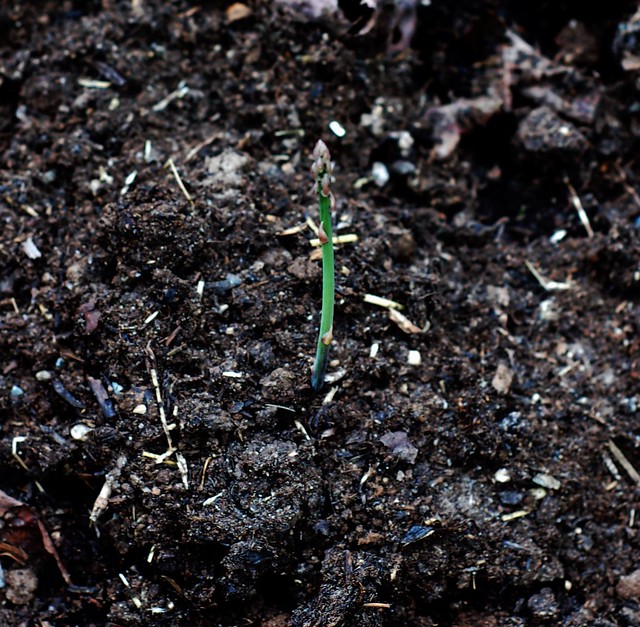
8. Then came the really hard part - waiting for the crowns to put down roots and send up shoots. Everything I read said this takes about a month but we spotted the first proud little sprout two days ago! And a day or so later, little greenish-red heads were breaking through the soil all along the rows.

First asparagus spear is up! by Eve Fox, The Garden of Eating, copyright 2015

Once the greens have poked up about five inches above the surface, we'll cover the trench with another thin layer of soil, leaving the top 3-4 inches of the stems exposed. And we'll repeat that process until the trench is level with the ground around it. Then we'll mulch the bed thickly to discourage weeds and let the plants go "vegetative" as the Farmers Almanac calls it. This lets the roots store up energy and helps them get established. In the fall, we'll cut the dead foliage back and side dress with compost.

9. Apparently, we can harvest a few spears next year but should leave the bulk of them to do their thing and die back on their own, simply trimming the dead foliage in the fall (you can leave it right on top of the dirt to decompose if you like), then dressing with compost and mulching well.

10. Once the beds hit their stride in the third year, we can harvest any spears that are thicker than a pencil. The harvest lasts for about 2-3 weeks. If we have too many, we'll pickle some (so good!) and asparagus also freeze well. Once the harvest has ended, we let the ferns grow to help give the plants more energy for the next year. The beds should produce for at least 20-25 years!!! Just think of all the delicious meals and stinky pee we have ahead of us :)

You might also like:
For more delicious recipes, gardening ideas, foraging tips, and food-related inspiration "like" the Garden of Eating on Facebook, or follow me on Twitter and Pinterest.